Umrah is a beautiful spiritual journey that allows you to connect with Allah Almighty. This deeply spiritual journey is a perfect opportunity for Muslims to pour their hearts out and seek the blessings and forgiveness of Allah Almighty.
Dua is the perfect way to communicate with Allah Almighty during a spiritual retreat. This is the reason why every pilgrim wants to know about the essential duas to learn before performing Umrah. You can recite the supplications from the Quran and Sunnah and even make duas in your language.
Learning a few essential duas before you embark on the spiritual retreat can motivate you and make you feel much more prepared during this transformative, faith-reviving journey. From the Talbiyah to duas for forgiveness, guidance, and acceptance, these supplications can help you make the most of your sacred journey.
So, as you look for the perfect Umrah deal from the UK. Take this time to learn about and memorise some essential duas that will enable you to have the most faith-reviving time during Umrah.
Duas to Learn Before Going for an Umrah
Even though there are no mandatory or specified duas to recite during Umrah, here are some essential duas that deserve a place in your dua list.
Dua for Intention and Entering the State of Ihram
As you enter the state of Ihram, you must make your intentions clear to perform the pilgrimage for Allah Almighty. Even though there is no mandatory verse or supplication to recite at this time, and you can make the intention in your heart, here is a dua that you can recite for this purpose.
Arabic:
لَبَّيْكَ عُمْرَةً
Transliteration:
Labbayka ‘Umrah
Meaning:
“Here I am, O Allah, for Umrah.”
Talbiyah
Talbiyah is among the most important phrases that you will be frequently reciting throughout your Umrah journey. Pilgrims start reciting it as soon as they have entered the state of Ihram and have made their intention. Here is Talbiyah.
Arabic
لَبَّيْكَ اللَّهُمَّ لَبَّيْكَ، لَبَّيْكَ لَا شَرِيكَ لَكَ لَبَّيْكَ، إِنَّ الْحَمْدَ وَالنِّعْمَةَ لَكَ وَالْمُلْكَ، لَا شَرِيكَ لَكَ
Transliteration
Labbayk Allahumma labbayk, labbayka la shareeka laka labbayk. Innal-hamda wan-ni‘mata laka wal-mulk, la shareeka lak.
Meaning
“Here I am, O Allah, here I am. Here I am, You have no partner, here I am. Surely all praise, blessings and dominion belong to You. You have no partner.”
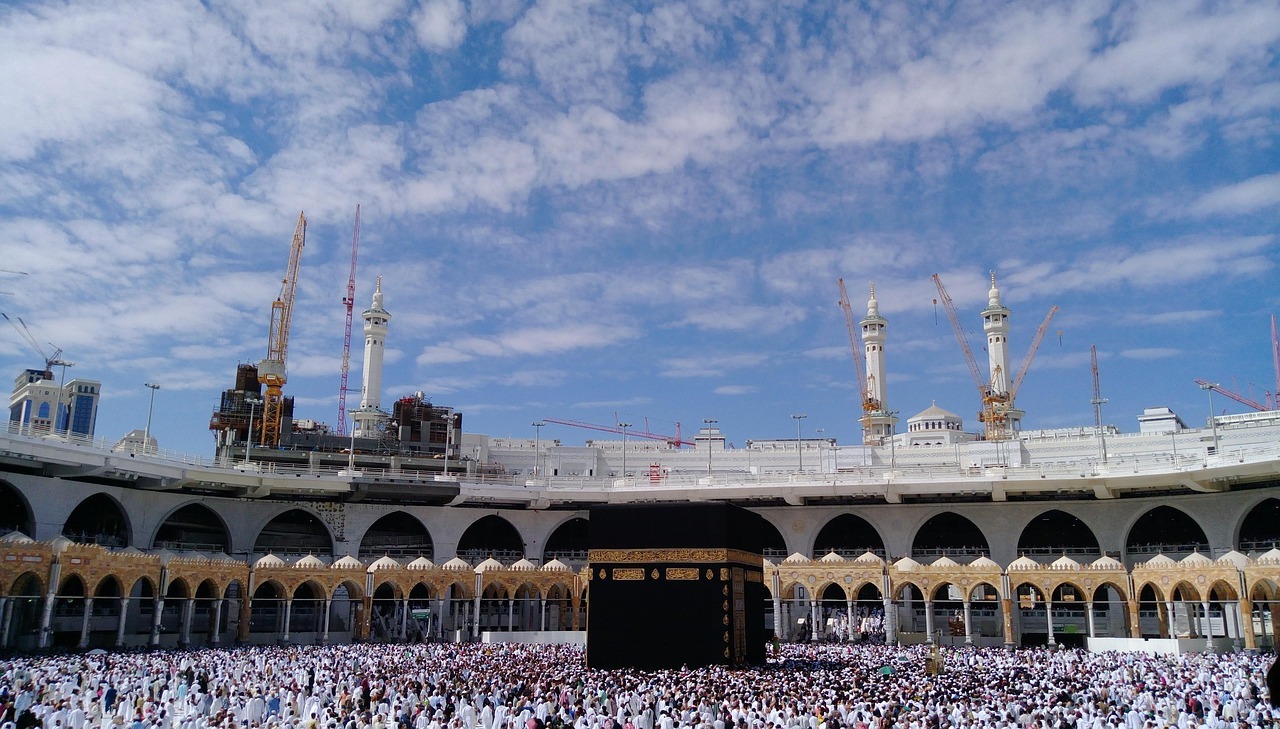
Dua When Entering Masjid al-Haram
As you enter the most sacred landmark in the world, you can recite the following dua.
Arabic:
بِسْمِ اللَّهِ، وَالصَّلَاةُ وَالسَّلَامُ عَلَى رَسُولِ اللَّهِ، اللَّهُمَّ افْتَحْ لِي أَبْوَابَ رَحْمَتِكَ
Transliteration:
Bismillah, wassalatu wassalamu ‘ala Rasulillah. Allahumma iftah li abwaba rahmatik.
Meaning:
“In the name of Allah, and blessings and peace be upon the Messenger of Allah. O Allah, open for me the gates of Your mercy.”
Dua Between Yemeni Corner and the Black Stone
There are no obligatory duas to recite during Tawaf. But here is a highly recommended Sunnah supplication to recite between the Yemeni corner and the Black Stone.
Arabic:
رَبَّنَا آتِنَا فِي الدُّنْيَا حَسَنَةً وَفِي الْآخِرَةِ حَسَنَةً وَقِنَا عَذَابَ النَّارِ
Transliteration:
Rabbana atina fid-dunya hasanatan wa fil-akhirati hasanatan wa qina ‘adhaban-nar.
Meaning:
“Our Lord, give us good in this world and good in the Hereafter, and protect us from the punishment of the Fire.”
Duas to Recite During Tawaf
Tawaf is a time when you feel the closest to Allah Almighty. This is a great time to make any duas and recite supplications. There is no authentic prescribed dua for this ritual, but this should not restrict you from immersing yourself in constant duas and dhikr. You can:
- Make a personal dua.
- Recite the Quran.
- Engage in dhikr.
- Send blessings upon the Prophet (SAW).
- Seek Allah’s forgiveness.
- Praise and glorify Allah.
- Ask Allah for your worldly and spiritual needs.
You can also immerse yourself in the following dhikrs.
SubhanAllah
“Glory be to Allah.”
Alhamdulillah
“All praise belongs to Allah.”
Allahu Akbar
“Allah is the Greatest.”
La ilaha illallah
“There is no deity worthy of worship except Allah.”
Astaghfirullah
“I seek forgiveness from Allah.”
Dua for Forgiveness
Asking for the forgiveness of Allah Almighty is one of the main purposes of Umrah. This pilgrimage gives you the perfect chance at redemption and to start your life anew with a clean slate. Therefore, make the most of this incredible opportunity. Here are some duas for forgiveness that you can recite.
Arabic
رَبِّ اغْفِرْ لِي
Transliteration
Rabbighfir li.
Meaning
“My Lord, forgive me.”
You can also frequently say:
أَسْتَغْفِرُ اللَّهَ
Astaghfirullah.
Dua for Mercy
A believer should never stop asking for the mercy of Allah Almighty. Here is a short supplication that you can memorise to keep asking for Allah Almighty’s mercy throughout your Umrah journey.
Arabic:
رَبِّ ارْحَمْنِي
Transliteration:
Rabbirhamni.
Meaning:
“My Lord, have mercy on me.”
Dua for Acceptance
Don’t forget to recite the dua for acceptance of your pilgrimage and your acts of worship.
Arabic:
رَبَّنَا تَقَبَّلْ مِنَّا إِنَّكَ أَنْتَ السَّمِيعُ الْعَلِيمُ
Transliteration:
Rabbana taqabbal minna innaka antas-Sami‘ul-‘Alim.
Meaning:
“Our Lord, accept from us. Indeed, You are the All-Hearing, the All-Knowing.”
Final Words
Learning essential duas before Umrah can help you approach the pilgrimage with greater confidence and spiritual awareness. However, you must keep in mind that Umrah is not a test of your memory. It is not a competition on how many Arabic supplications you can memorise. You can always keep the written duas with you to recite from in case you can’t memorise them. So, as you search for the perfect Umrah package from London, also take out some time to prepare the perfect Umrah dua list that will accompany you on your spiritual retreat.